


Autor: Weibo
Datum: Nov 17, 2026
Plastic Injection Machine Parts: Screw, Barrel and Wear Part Buying Guide
A 250-ton machine stops mid-shift. Shot weight has been drifting for three weeks, melt time is running nearly 20 percent above setpoint, and black streaks are showing on parts that were clean last month. Maintenance checks the mold first, then the resin, then finally pulls the plasticizing unit — and finds the metering section of the screw worn badly enough that material is slipping back past the check ring.
That is the failure mode that actually costs output on an injection molding machine. Not the pump, not the valve — the screw, the barrel, the check ring and the nozzle. These four wear together, yet they are almost always bought as four separate line items, ordered one at a time, with the cheapest and the first-to-fail getting attention first.
The usual result: someone raises a purchase order for a barrel, follows it with a screw, and pushes the check ring to the next shutdown. The machine goes back together, still leaks, still drifts, and the new screw gets blamed for it.
If you have searched this topic before, you have probably landed on pages describing injection mold components — cavities, cores, ejector pins, runners, cooling circuits. Those are mold parts, not machine parts. They sit in a different supply chain, fail in different ways, and are bought by different people. This article stays on the machine side: which plastic injection machine parts wear, how they are specified, what to check before ordering, and how to stop a repair from becoming a repeat purchase three months later.
The plastic injection machine parts that cost the most output — screw, barrel and check ring — rarely appear on a spares list, because they fail by slow performance decay rather than by sudden breakage.
Which Plastic Injection Machine Parts Actually Decide Your Output
Strip away the marketing language and the parts on an injection molding machine fall into three groups. Each group has its own buying logic, and mixing them up is where most ordering mistakes begin.
- Plasticizing and injection unit: screw, barrel, check ring (non-return valve), screw tip, nozzle, nozzle body, feed throat, heating bands and thermocouple pockets. These parts see molten polymer under pressure, every cycle, for years.
- Clamp and lock-up system: tie bars, tie bar nuts, fixed and moving platens, toggle pins, bushings, hydraulic cylinders and the clamping piston. These parts see mechanical load and fatigue, not polymer.
- Drive, hydraulics and control: pumps, proportional valves, servo motors, pressure sensors, position transducers and control modules. These fail by contamination, heat or electronics, not by abrasion.
The plasticizing and injection group is where output is decided. A worn pump will alarm and stop the machine. A worn check ring will keep the machine running while quietly costing you cycle time, scrap rate and dimensional consistency, and nobody files a maintenance request because nothing has technically broken.
That is the core difference in how these parts fail. Half the clamping unit failures announce themselves — a cracked tie bar nut, a leaking cylinder, a toggle pin that starts squealing. Plasticizing failures announce themselves with data you have to go looking for: shot weight spread widening, cushion position shrinking, melt temperature creeping up, black specks appearing on a part that was fine last quarter.
It is also worth separating machine parts from mold parts properly, because the search results rarely do. A cavity insert, a hot runner manifold, a sprue bushing and an ejector sleeve are tooling. A screw, barrel and check ring are machine. The tooling is bought by a mold engineer against a part drawing; the machine parts are bought by a maintenance or procurement team against a machine build sheet and a resin specification. The two specs are not interchangeable, and neither are the suppliers.
Sort your parts list by failure mode, not by price: plasticizing parts fail slowly and cost output, clamp parts fail suddenly and cost production days.
The Screw and Barrel Pair Sits at the Center of Every Purchase
Almost every specification conversation starts here, and it should. The screw and barrel are the only parts in the machine that touch the polymer continuously, and their condition sets the ceiling on what the machine can hold in tolerance.
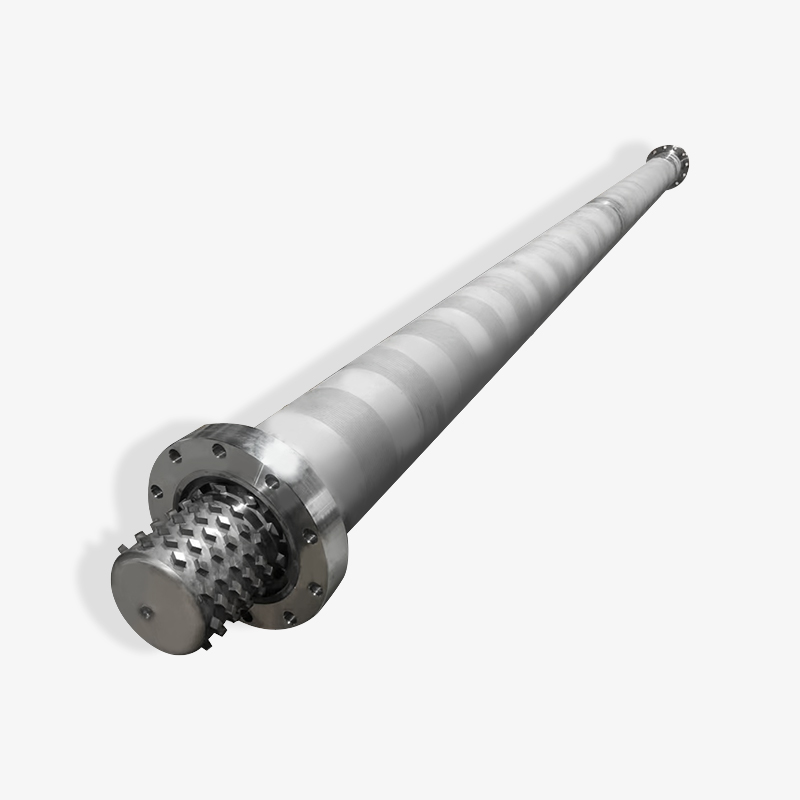
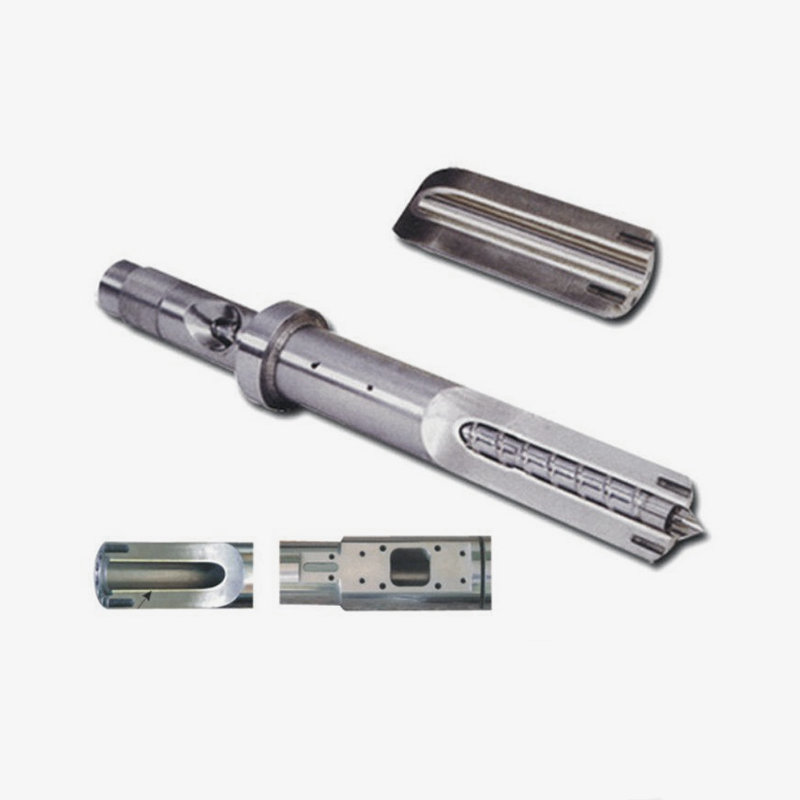
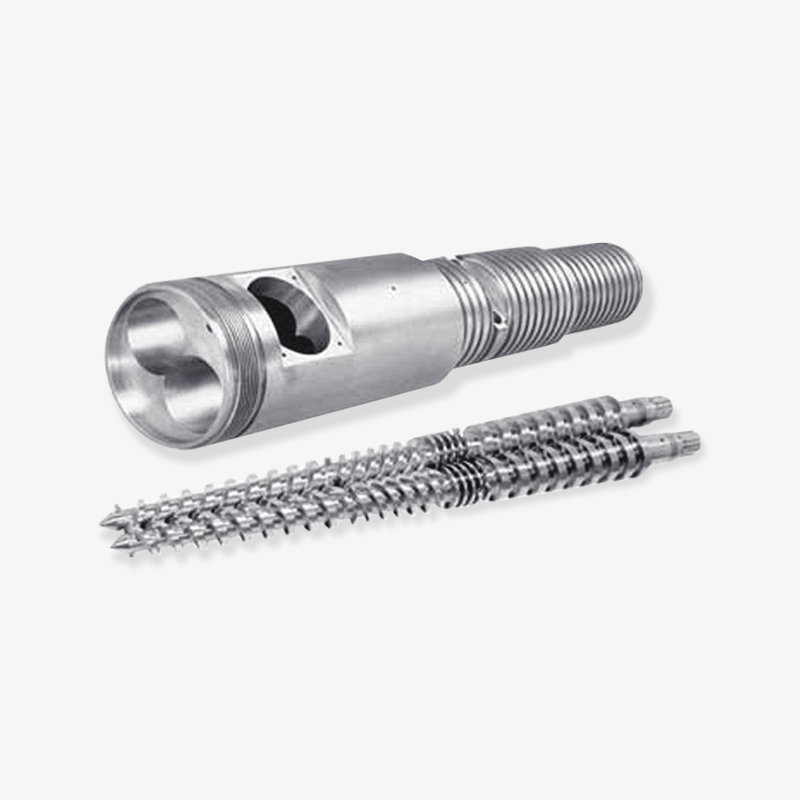
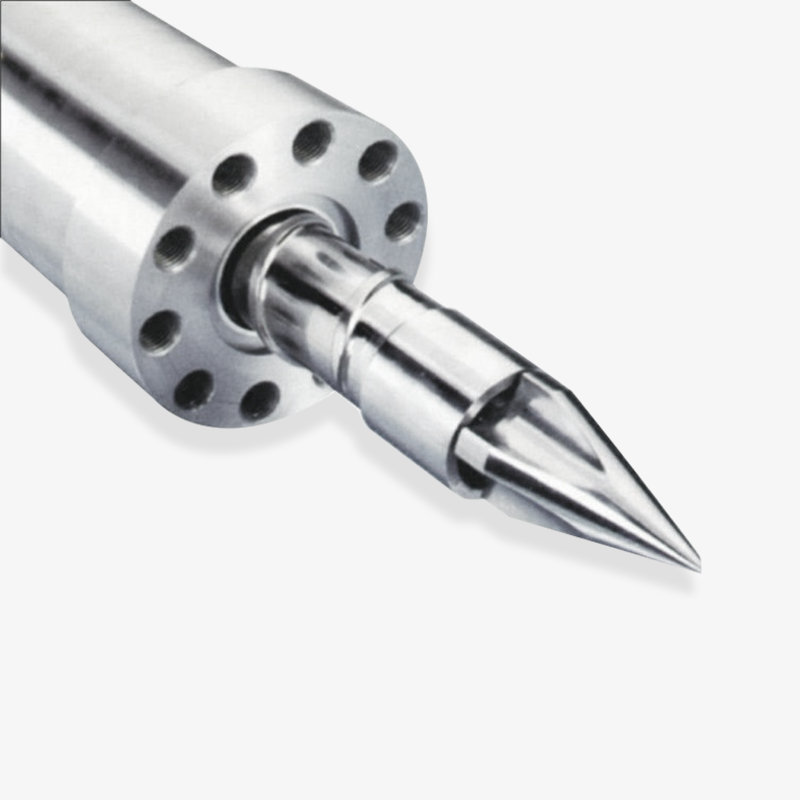 Custom Injection Molding Screw and BarrelThe screw and barrel are the only parts continuously contacting polymer, so their matched design and condition set the machine’s tolerance ceiling.View Product →
The working relationship between the two is a controlled clearance. On a general-purpose injection screw, the radial clearance between the screw flight and the barrel bore is typically in the region of 0.1 to 0.2 percent of screw diameter per side, tight enough to act as a seal and loose enough not to gall. That clearance only moves in one direction once the machine goes into production. As it opens, polymer flows backward across the flights instead of forward into the shot, and the machine compensates by pushing the screw further and longer.
You can see the clearance problem in the process data before you see it in the parts. Watch for a widening spread in shot weight over a shift, a cushion position that trends toward zero, and melt time that steadily climbs while barrel temperatures stay flat. Those three signals together are the classic signature of an opening screw-to-barrel clearance or a leaking check ring.
Geometry matters as much as wear. The main parameters you will be asked to confirm are:
- Screw diameter and length-to-diameter ratio: general-purpose injection screws commonly run between 18:1 and 24:1. Short ratios suit heat-sensitive resins; longer ratios give better mixing and melt uniformity for engineering polymers.
- Compression ratio: low for amorphous polymers such as ABS and PS, higher for semicrystalline materials such as PP and PE, where densification during melting needs more compression.
- Feed, compression and metering lengths: the proportion between the three zones controls how gently the material is conveyed and how stable the melt is at the end of the stroke.
- Barrel heating zones and thermocouple positions: these must match the machine's control configuration, not just the physical dimensions. A barrel that bolts up perfectly but puts a thermocouple hole in the wrong place will never hold a stable profile.
The mistake that costs the most money is sizing a replacement screw purely by copying the original drawing. If the machine has changed what it runs — a filled grade, a higher glass content, a faster cycle — the original geometry may be the reason the part failed early. A replacement is the one moment when the geometry can be corrected at no extra cost.
Replace the screw and barrel on measured clearance and drift in process data, not on a fixed calendar, and use the replacement order to correct geometry that no longer matches the resin you run.
Wear Parts That Must Be Replaced as a Set
The check ring is the cheapest part in the plasticizing unit and the one most often left in place during a rebuild. That single decision undoes most of the benefit of a new screw and barrel.
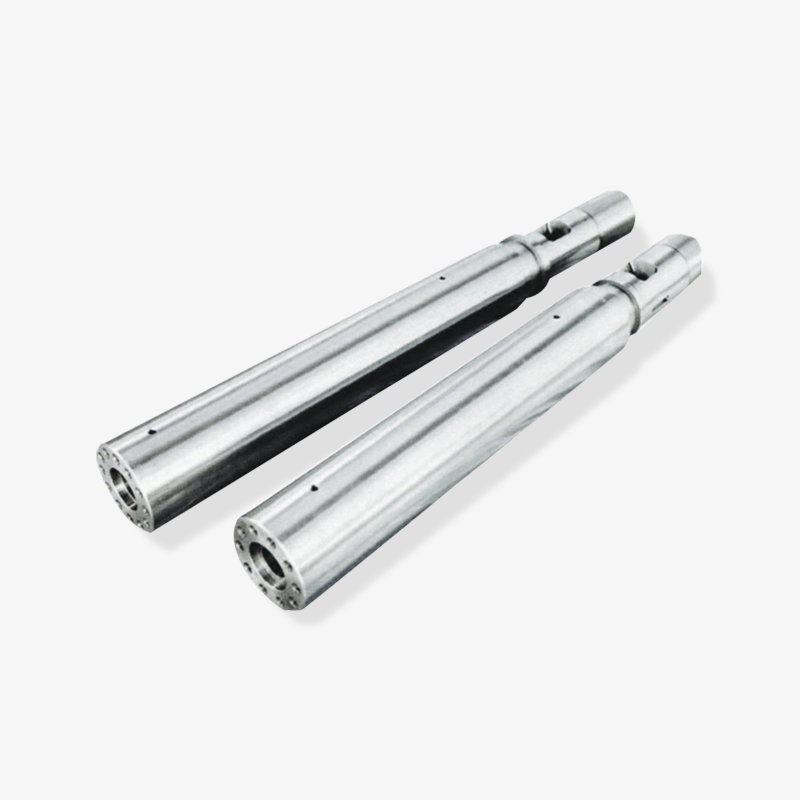
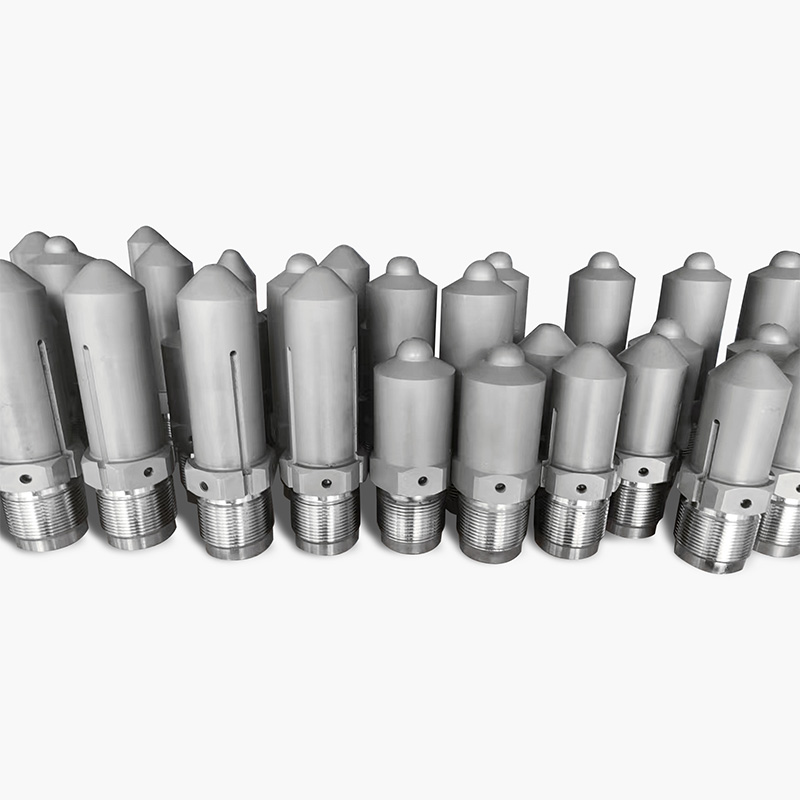 Custom Injection Molding Machine Accessories and Check Ring ComponentsThe check ring is inexpensive but critical, and this SKD61 accessory set includes the front body, screw parts, and nozzle for matched rebuilds.View Product →
A check ring works by sliding on the screw head and sealing against a seat during injection. Both the ring and the seat wear. A new ring on a worn seat leaves a gap that opens under injection pressure, and that gap behaves exactly like a worn screw — shot size inconsistency, longer hold times, flash on one shot and short shots on the next. The parts that belong in this group are:
- Check ring and check ring seat (non-return valve): the primary seal against backflow during injection.
- Screw tip and nozzle head: the fluid path between the metering zone and the mold sprue.
- Nozzle body and nozzle tip: contact parts that see both thermal cycling and mechanical contact force against the mold.
- Feed throat and feed sleeve: the interface between the hopper and the barrel, where granulate enters and where wear shows up as unstable feeding.
- Heating bands and thermocouples: not wear parts in the abrasive sense, but the parts that determine whether a new screw and barrel can actually hold its temperature profile.
The economics are straightforward. A check ring costs a small fraction of a screw and barrel set, but a leaking one can add several seconds to every cycle through extended hold and recovery time. On a machine running a 20-second cycle across three shifts, a two-second penalty is roughly a 10 percent loss in output. That loss runs silently for months because no alarm ever fires.
Nozzle contact force is another quiet wear point. If the nozzle is set too far back and the carriage pushes it against the sprue bushing under full force every cycle, the nozzle tip mushrooms and the sealing radius degrades. A degraded radius leaks, and a leaking nozzle is often misdiagnosed as a worn check ring because the symptoms — drooling, stringing, inconsistent shot weight — look similar.
Always replace the check ring, seat, screw tip and nozzle as one set with the screw and barrel — a new screw paired with an old check ring will reproduce the original problem within weeks.
Injection Unit versus Clamp Unit: Two Different Buying Conversations
Buying injection-side parts and buying clamp-side parts require different questions, different documents and different acceptance criteria. Treating them as one generic purchase order is how dimensional mismatches slip through.
Injection-side purchasing
This is a performance purchase. You are specifying a melt quality, a shot repeatability and a wear life against a named resin. That means the supplier needs your resin grade, filler content and percentage, your shot weight, your cycle time and your barrel heating configuration. A supplier who quotes a screw without asking for the filler percentage is quoting a generic part, and a generic part is usually the reason the last one failed early.
Clamp-side purchasing
This is a dimensional and metallurgical purchase. Tie bars, tie bar nuts and toggle pins are load-bearing parts made to tight tolerances, and the acceptance criteria are mechanical: thread form, hardness, concentricity, straightness and material certification. A tie bar nut with the correct thread but the wrong hardness class is a fatigue failure waiting for a production run to happen.
The practical checklist for clamp-side parts is short but non-negotiable:
- Confirm thread pitch, thread form and hardness class against the machine builder's drawing, not against a sample part.
- Request material certification with heat number traceability on load-bearing items.
- Check straightness and concentricity limits in writing, and confirm how they will be measured on arrival.
- Confirm whether the part is supplied finish-machined or as a semi-finished blank requiring final fitting on site.
One more point that applies to both sides: keep a dimensional record of what came off the machine. Screw diameter at the metering section, barrel bore at three positions, check ring outside diameter, nozzle radius. When those numbers are written down at removal, the next purchase becomes a specification instead of a guess, and the wear rate becomes a measurable value rather than a memory.
Injection-side parts are bought against resin data, clamp-side parts against drawings and hardness certificates — never send the same enquiry to both.
How Abrasive and Corrosive Resins Reshape the Parts Specification
Two machines with identical nameplate data can need completely different screws depending on what runs through them. Filler type and loading percentage change the wear mechanism far more than machine tonnage does, and that difference should drive both material selection and inspection intervals.
The chart below compares relative wear load across common material families. It is an engineering approximation for general-purpose screws, not a specification, and actual life will shift with screw speed, back pressure, melt temperature and whether the filler is fully compounded.
Unfilled PP / HDPE
1.0
Unfilled ABS / PS
1.3
30% Talc-filled PP
2.4
30% Glass-filled PA66
6.5
50% Glass-filled PBT
7.2
Read the chart as a pressure indicator rather than a lifespan table. Moving from unfilled PP to a 30 percent glass-filled PA66 raises the relative wear load by a factor of roughly six, which is why the same screw profile that gives years of service on a household goods line can be finished in a matter of months on an automotive under-hood part. It also explains why a plant that runs both on the same floor should not standardise on one screw specification.
For buyers working with a screw and barrel manufacturer, the practical takeaway is that filler data has to be part of the enquiry. Glass content above roughly 20 percent usually pushes the conversation toward bimetallic barrels and hardened or surface-treated screws, and it changes the recommended clearance, because a wider clearance that suits a filled grade will leak badly on an unfilled one.
Corrosion is a separate axis and deserves its own treatment. PVC, flame-retardant grades containing halogenated additives, and some acetal formulations attack the barrel bore chemically rather than mechanically. Those cases call for corrosion-resistant alloys or suitable plating, and they also change the shutdown routine, because leaving PVC sitting hot in a barrel is far more damaging than leaving PP.
Send the filler type and percentage with every screw enquiry — abrasive and corrosive resins need different barrel materials, different clearances and shorter inspection intervals.
Matching Screw Geometry to the Polymer You Actually Run
Geometry selection is where a good supplier earns its price. A screw that is dimensionally correct but geometrically wrong will run, will produce parts, and will never quite deliver a stable process.
For general-purpose screws, the practical starting points cluster around a few familiar combinations:
- PP, PE and other polyolefins: a barrier or general-purpose screw with moderate to high compression, good feed section length and a metering section deep enough to avoid over-shearing. These resins are thermally forgiving but shear-sensitive at high rates.
- ABS, PS and other amorphous resins: lower compression, gentler transition, and attention to melt temperature stability rather than mixing intensity.
- PC and PC blends: high viscosity and narrow processing window, which calls for a longer transition zone and generous metering depth to avoid excessive shear heating.
- Glass-filled PA, PBT and POM: abrasion-resistant construction first, geometry second. Mixing sections with sharp edges and narrow clearances become wear accelerators rather than performance features.
- Rigid PVC: short compression zone, low compression ratio and corrosion-resistant metallurgy, because PVC degrades on residence time and attacks unprotected steel.
Diameter choice interacts with all of this. A larger screw gives more shot capacity per stroke and lower screw speed for the same output, which reduces shear. A smaller screw gives finer shot control and better residence time behaviour for small parts. Plants that run a wide range of shot weights on one machine often end up with a compromise screw that is mediocre everywhere — which is a purchasing decision, not a machine limitation.
The one parameter most often overlooked is the metering section depth. A shallow metering section gives better pressure build-up and more consistent melt, but it raises shear and melt temperature. A deep metering section is gentler but gives up some pressure stability. When a machine starts showing inconsistent shot weight at high recovery rates, the metering depth is usually part of the conversation.
Specify screw geometry against the resin family you run most, not against the original drawing — compression ratio and metering depth drive stability more than diameter does.
Materials and Surface Treatments That Set Service Life
Two screws with identical geometry can differ by a factor of three in service life depending on base steel and surface treatment. This is where buyers most often accept a vague description and regret it later.
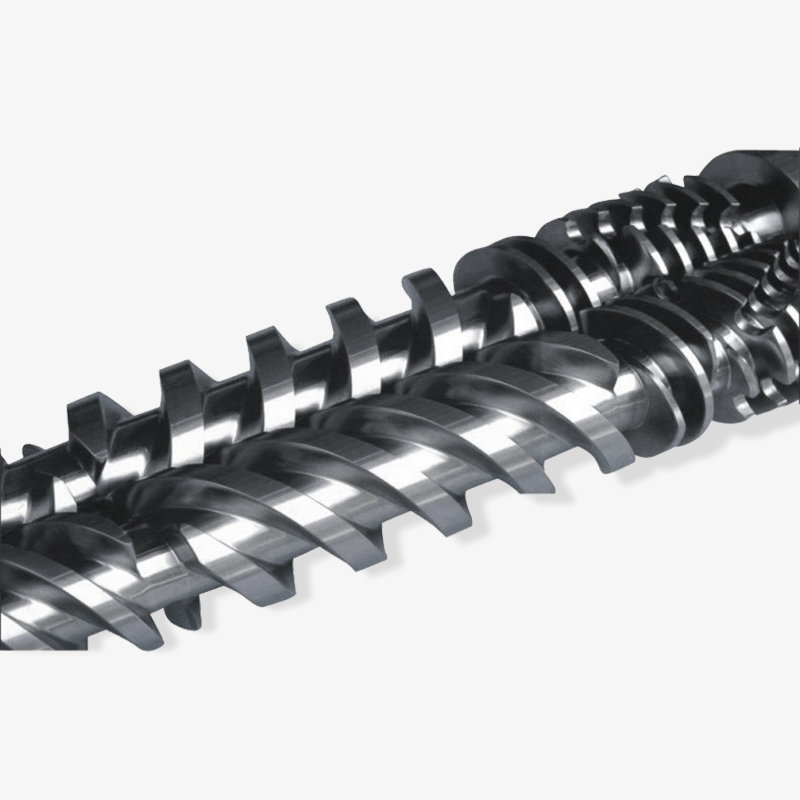
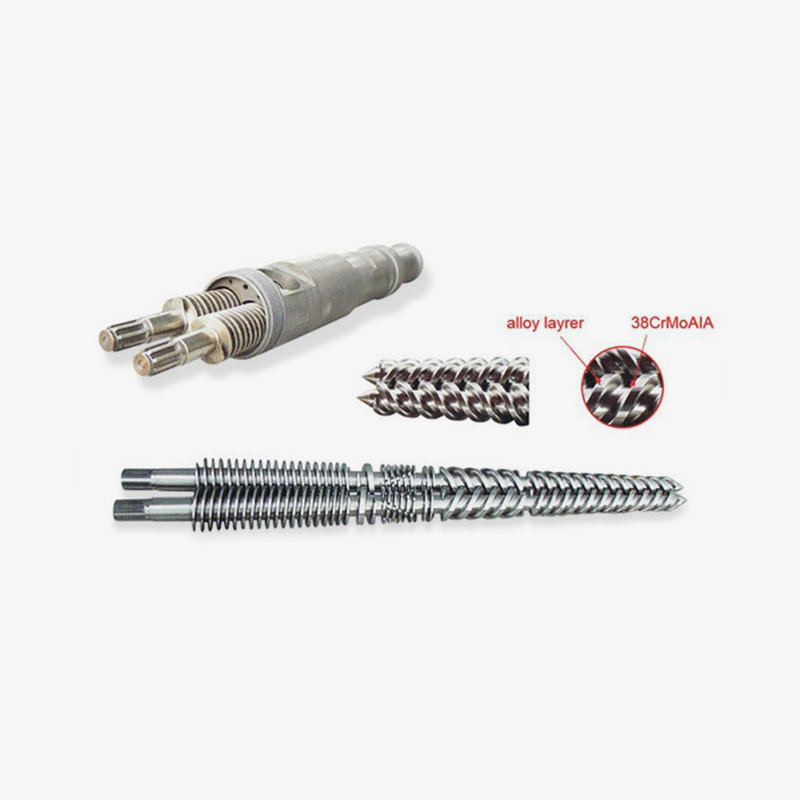 Custom Bimetallic Screw for Filled and Reinforced PlasticsBimetallic construction uses a special alloy surface for wear, corrosion, and high-temperature resistance, making it suitable for glass-fiber-reinforced and other engineering plastics.View Product →
Nitrling is the default for general-purpose work and remains the most cost-effective choice for unfilled commodity resins. It is not suitable for abrasive fillers, because a nitrided case is hard but thin, and once it is worn through the underlying steel wears quickly. Bimetallic construction is the standard answer for filled and reinforced materials: a high-alloy liner cast into the barrel body, typically achieving hardness in the range of HRC 58 to 62 with better abrasion resistance than a nitrided case.
| Construction | Base material | Typical treatment | Best suited to | Relative cost | What to verify |
|---|---|---|---|---|---|
| Nitrided screw and barrel | 42CrMo or similar alloy steel | Gas nitriding, case depth typically 0.3 to 0.6 mm | Unfilled PP, PE, PS, ABS | Baseline 1.0 | Case depth report and surface hardness |
| Bimetallic barrel with bimetallic screw | Steel body with centrifugally cast alloy liner | Alloy liner, hardness around HRC 58 to 62 | Glass-filled PA, PBT, high mineral loading | 1.6 to 2.2 | Liner thickness, bond integrity, alloy grade |
| Through-hardened tool steel screw | H13-type steel | Hardening and tempering, optional PVD coating | Combined abrasive and corrosive duty | 2.0 to 2.8 | Hardness uniformity and coating thickness |
| Hard chrome plated screw | Nitrided steel with chromium layer | Hard chrome plating, roughly 20 to 40 microns | Corrosion control in general-purpose duty | 1.1 to 1.3 | Plating adhesion and coverage at flight roots |
The verification column matters more than the selection column. A bimetallic barrel is only as good as its liner bond, and liner thickness is what determines how many years of service you get before a rebuild. Ask for the inspection record, not just the alloy name.
Surface finish is the other half of the story. A polished flow surface reduces material adhesion and helps with colour changes and purging. A rough surface in the metering zone holds degraded material and becomes the source of black specks that no amount of purging will clear.
Match the construction to the filler, then demand the inspection record — liner thickness and case depth are what you are actually paying for.
A Sizing and Compatibility Checklist Before You Order
Most ordering errors are dimensional, and most dimensional errors are avoidable with a photograph and a caliper. Work through this list before confirming a purchase order.
- Screw diameter and overall length, measured at the drive end and the metering section, not just assumed from the machine nameplate.
- Barrel flange dimensions: bolt hole count, pitch circle diameter and hole size. These vary between machine builders even at the same tonnage.
- Feed throat opening and hopper mounting pattern. A barrel that matches everywhere except the feed opening is scrap.
- Heating zone count, band width and voltage. Confirm whether the machine uses 220 V or 380 V bands and how many zones the controller expects.
- Thermocouple pocket position and depth, including whether the machine uses J or K type and how deep the probe sits.
- Nozzle radius and orifice diameter, matched to the sprue bushing radius on the mold. A mismatch here produces flash at the sprue and premature nozzle wear.
- Check ring type: sliding ring, ball check or three-piece design, and the seat angle that matches the screw head.
- Screw drive connection: spline, keyway or square drive, with the coupling dimensions confirmed against the gearbox output.
Two extra items belong on the list even though they are not parts. The first is a dimensional record of the machine as it stands, including barrel bore measurements taken at the feed, middle and metering positions. The second is a note of which resin grades the machine will run over the next two years. Both reduce the chance of ordering a part that is correct for the machine's history and wrong for its future.
For imported machines, add a step for documentation. Machine builders change subcontractors, and a 2019 build sheet may not describe a 2021 machine of the same model. Photographs of the actual barrel flange, taken with a ruler in frame, resolve most of these questions in a single email exchange.
Measure the flange, feed throat, thermocouple pockets and drive connection on the actual machine — nameplate tonnage alone will not get you a part that fits.
What to Ask a Manufacturer or Wholesaler Before You Commit
There is a real difference between a manufacturer and a trading supplier, and it shows up at the second order rather than the first. A manufacturer can adjust geometry, hold a tolerance and provide a material record. A wholesaler who simply moves boxes usually cannot, and the gap becomes visible when a part needs modification or when a wear claim has to be settled.
Questions worth asking early in the conversation:
- Can you confirm the base steel grade and the surface treatment thickness in writing?
- Do you machine the screw geometry to my resin specification, or do you supply a standard profile only?
- What dimensional inspection is performed before shipment, and what report comes with the part?
- Can you supply the matched set — screw, barrel, check ring, seat and nozzle — as a single verified assembly?
- How do you handle a wear claim: replacement, rework, or a dimensional analysis of the returned part?
- What is your experience with the filler percentage and resin family I am running?
The answers tell you more than the price. A supplier who asks for your shot weight, filler loading and barrel heating configuration before quoting is doing specification work. A supplier who quotes from a diameter and a length is selling a commodity part, and commodity parts are what fail early on abrasive duty.
Delivery and export experience also matter once you are buying across borders. Parts that ship without protective packing on the flights and the nozzle seat arrive with handling damage that is hard to prove after the fact. Ask how the part is packed, whether the nozzle and check ring are individually protected, and what documentation travels with the shipment for customs and warranty purposes.
A supplier who asks about your filler loading and heating configuration before quoting is doing specification work; one who quotes from diameter alone is selling a commodity part.
Failure Patterns and What They Tell You
Every plasticizing failure leaves a signature in the process data or on the part surface. Reading those signatures correctly saves you from replacing the wrong component.
- Black specks or brown streaks on the part: degraded material held in a rough area, usually the metering zone, the check ring seat or behind the screw tip. Purging clears it briefly, then it returns.
- Shot weight spread widening over a shift: backflow across the flights or past the check ring. Confirm by measuring the cushion position across consecutive cycles.
- Melt time climbing with stable temperatures: reduced conveying efficiency, typically wear in the feed section or an opening screw-to-barrel clearance.
- Short shots appearing at random on a stable process: check ring leakage or a nozzle restriction, not usually the screw.
- Flash on one shot and short shot on the next: inconsistent shot size from a leaking non-return valve, sometimes combined with a worn seat.
- Drooling or stringing at the nozzle: degraded nozzle tip radius, worn seat contact or incorrect decompression settings.
- Barrel temperature that will not hold on one zone: failed heating band, incorrect thermocouple contact or a thermocouple pocket that no longer seats the probe properly.
A methodical diagnostic sequence saves money here. Start with the cheapest parts: heating bands and thermocouples, then nozzle and check ring, then measurement of screw and barrel clearance. Reversing that order means paying for a screw replacement to fix a problem that a nozzle tip would have solved.
When the symptoms point to the screw and barrel, a more detailed review of injection molding machine screw barrel common problems can help you separate wear from setting issues before committing to a replacement order. Many apparent wear failures turn out to be a combination of a leaking check ring and a back pressure setting that has been raised over the years to compensate for it.
Diagnose from cheapest to most expensive: heating bands, nozzle, check ring, then screw and barrel measurement — never start at the screw.
Frequently Asked Questions
What are the main plastic injection machine parts that wear out?
The highest-wear group is the plasticizing unit: screw, barrel, check ring, check ring seat, screw tip and nozzle. On the clamp side, tie bar nuts, toggle pins and bushings wear over longer intervals. Heating bands and thermocouples fail by thermal cycling rather than abrasion, but they are replaced more often than any mechanical part.
How do I know when the screw and barrel need replacing?
Measure rather than guess. If the radial clearance between the screw flight and the barrel bore has grown to roughly three times the original specification, replacement is usually justified. The supporting evidence is process data: widening shot weight spread, shrinking cushion, rising melt time and increasing back pressure needed to hold the same shot.
Should the screw and barrel always be replaced together?
In most cases, yes. A new screw running in a worn barrel will not seal properly, and the new part wears faster as a result. The same logic applies to the check ring and seat. Replacing one element of a matched set usually produces a machine that runs better for a few weeks and then drifts back to where it started.
What is the difference between a nitrided and a bimetallic barrel?
A nitrided barrel has a hardened case diffused into the steel surface, typically 0.3 to 0.6 mm deep. A bimetallic barrel has a high-alloy liner cast into the bore, with hardness around HRC 58 to 62 and much better resistance to abrasive fillers. Nitriding suits unfilled commodity resins; bimetallic construction suits glass-filled and mineral-filled engineering resins.
Can I replace the screw without replacing the barrel?
You can, and sometimes it is the right decision when the barrel bore is still within tolerance and the clearance can be restored with a slightly oversized screw. That requires an accurate bore measurement first. Without it, an oversized screw in a worn bore is a gamble that usually ends in galling or premature wear.
How long should injection molding machine screws last?
There is no single answer, because filler content dominates. Unfilled commodity resins can give many years of service on a well-maintained machine, while heavily glass-filled engineering resins can wear a general-purpose screw significantly faster. The practical approach is to measure clearance at scheduled intervals and let the wear rate, not the calendar, set the replacement point.
Should I buy from a manufacturer or a wholesaler?
Buy from a manufacturer when geometry needs to match a specific resin, when tolerances are tight, or when you need material and inspection documentation. A wholesaler can work for standard parts on non-critical duty, but the ability to adjust a profile or investigate a wear claim usually sits with the manufacturer.
Odabrani zaslon ležaja


 浙公网安备 33090202000520 号
